Good nutrition is essential for a healthy and active life. However, many people do not get enough vitamins and minerals from their daily diet. Food fortification is an effective way to help address these nutritional gaps.
What is Food Fortification?
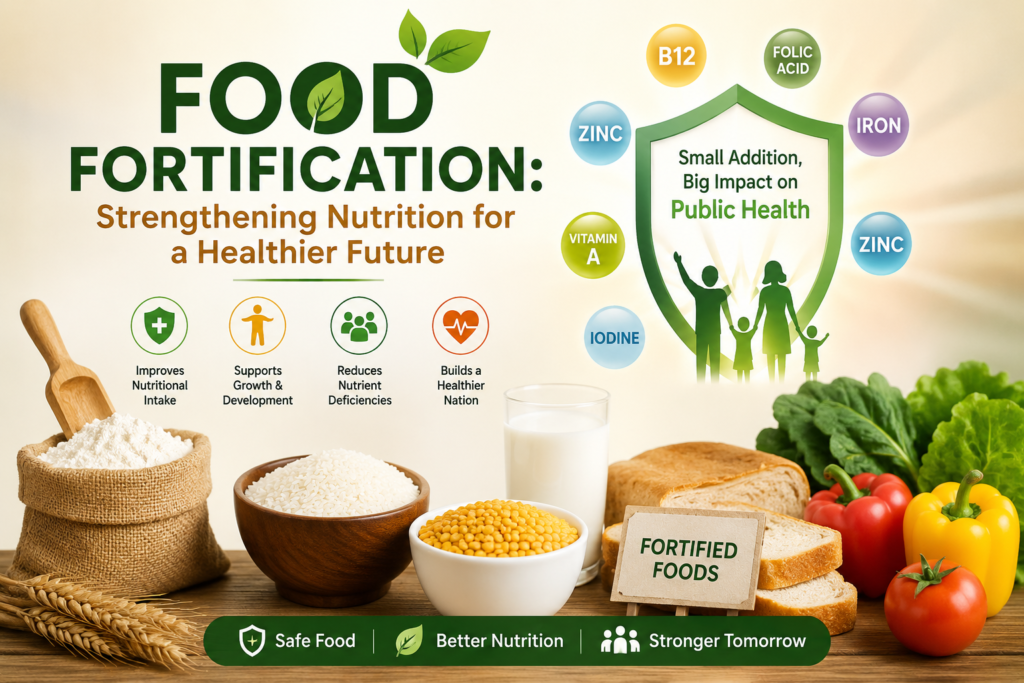
Food fortification is the process of adding essential vitamins and minerals to commonly consumed foods to improve their nutritional value. Nutrients such as iron, folic acid, vitamin A, vitamin D, iodine, and calcium may be added to foods depending on nutritional needs.
Why is Food Fortification Important?
Micronutrient deficiencies can affect growth, immunity, learning ability, and overall health. Fortification can help increase the intake of important nutrients without requiring people to make major changes to their normal eating habits.
Common examples include:
– Iodized salt – helps prevent iodine deficiency.
– Fortified wheat flour – may provide iron, folic acid, and other nutrients.
– Fortified rice – can be enriched with essential micronutrients.
– Fortified milk and edible oils – may contain added vitamins such as A and D.
Food Fortification and Public Health
Food fortification can be especially useful when it reaches large populations through foods that people regularly consume. It can support nutrition programmes and contribute to reducing micronutrient deficiencies.
However, fortification works best as one part of a balanced nutrition strategy. A healthy diet should include a variety of cereals, pulses, fruits, vegetables, milk or alternatives, and other nutritious foods.
🌱 Conclusion
Food fortification is a valuable tool for improving nutrition and supporting healthier communities. By making essential nutrients available through everyday foods, it can help build a stronger and healthier future.
“Better nutrition today, healthier communities tomorrow.”